

A confident smile is one of the first things people notice. It opens doors, builds connections, and makes you feel great. But if you hold back your smile because of misaligned teeth, you might wonder what options actually exist to fix it.
Orthodontic care has advanced remarkably over the years, offering solutions that fit your specific lifestyle, budget, and personal comfort. You no longer have to settle for a one-size-fits-all approach. Instead, you can choose a treatment plan designed entirely around your life.
This guide walks you through the different types of braces (with pictures) available to you and your family, helping you make a fully informed decision for your oral health.
Key Takeaways
- Traditional metal braces offer unmatched durability and power for complex tooth corrections.
- Ceramic braces and clear aligners provide discreet, aesthetically pleasing alternatives to metal brackets.
- Specialized treatments like TADs and surgical orthodontics tackle severe alignment and bite issues effectively.
- Your daily routine, budget, and specific dental needs play a crucial role in determining the right treatment for your family.
The Classics: Traditional Metal Braces
Traditional metal braces remain the most common orthodontic treatment, and for good reason. They are incredibly effective at treating a wide variety of complex dental issues. Modern metal braces use high-grade stainless steel brackets and archwires to gradually guide your teeth into their proper positions.
The biggest advantage of metal braces is their durability. They are strong, resilient, and rarely break, making them an excellent choice for active kids and teenagers. They also tend to be the most cost-effective option. Plus, younger patients often love customizing their smile with different colored rubber bands.
On the downside, metal braces are highly visible. Some patients also experience minor discomfort or irritation on their cheeks and gums as they adjust to the metal hardware.
(When searching for types of braces pictures, traditional metal brackets are usually the first images you will see, showcasing their familiar silver appearance.)

Subtle Solutions: Ceramic Braces
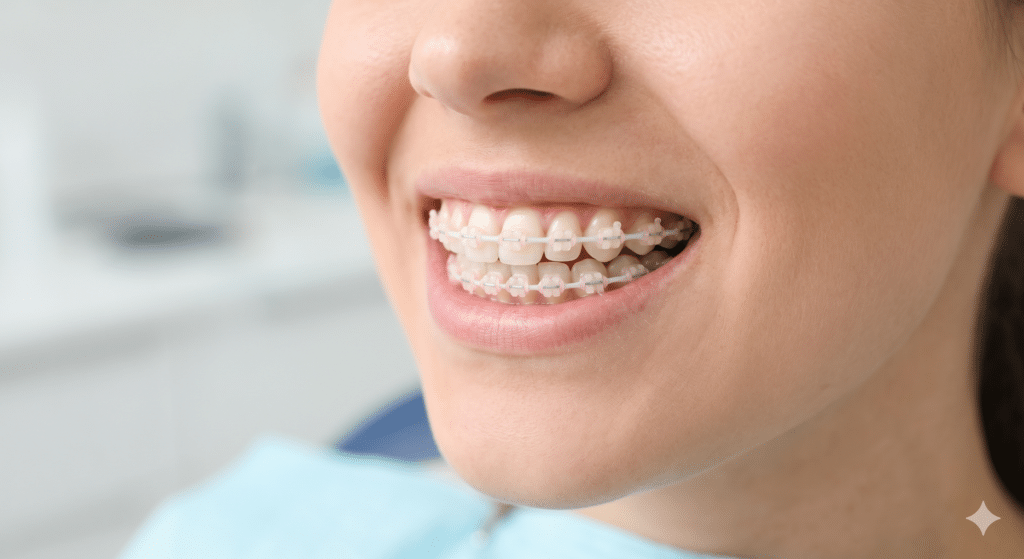
If you want the reliable power of traditional braces but prefer a more subtle look, ceramic braces are a fantastic alternative. These function exactly like metal braces, but the brackets are made of clear or tooth-colored ceramic materials.
Because they blend in with your natural teeth, ceramic braces are much less noticeable. This makes them a highly popular choice for adults and older teenagers who want to maintain a professional or low-profile aesthetic during their treatment.
However, ceramic brackets are slightly larger and more brittle than metal ones. They require excellent oral hygiene, as the clear elastic ties that hold the wire to the brackets can stain if you frequently consume coffee, tea, or dark-colored foods. They also tend to cost slightly more than standard metal options.
(Types of braces images often highlight ceramic braces as the ideal middle ground between traditional hardware and completely clear treatments.)
Hidden Helpers: Lingual Braces
For those who want a completely invisible treatment without using removable trays, lingual braces offer a unique solution. These braces work just like traditional metal braces, but your orthodontist attaches the brackets and wires to the back (lingual) side of your teeth.
The primary benefit is total invisibility from the outside. You can smile, speak, and laugh freely without anyone knowing you are undergoing orthodontic treatment.
Lingual braces do come with a few challenges. Because they sit close to your tongue, they can cause temporary speech changes, such as a slight lisp. They also require meticulous cleaning, as brushing the back of your teeth with hardware attached can be difficult. Furthermore, lingual braces are usually more expensive due to the highly customized nature of the brackets.
(While rare in standard types of braces pictures, lingual braces are fascinating to see due to their hidden placement behind the teeth.)

The Clear Choice: Clear Aligners
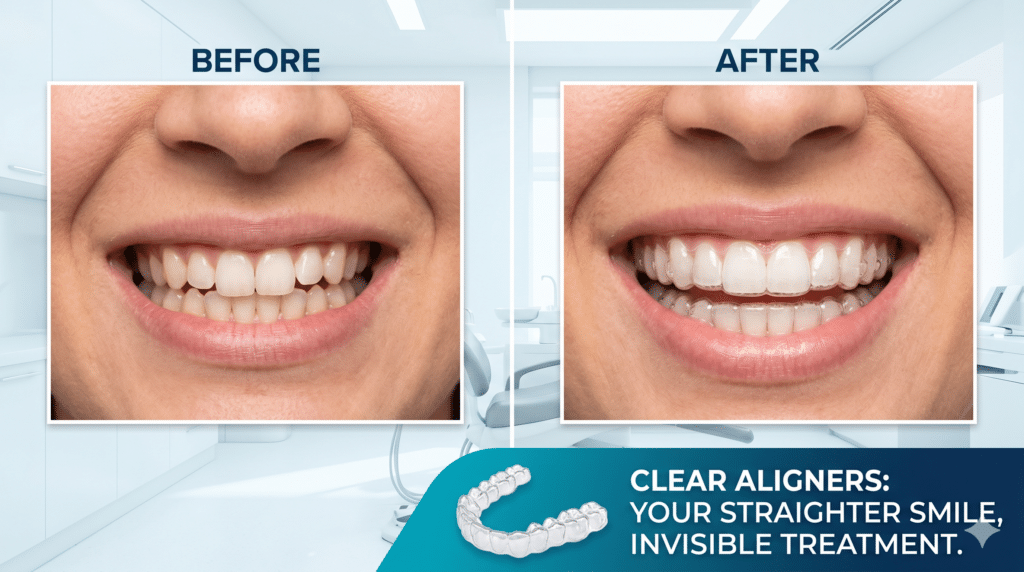
Clear aligners have revolutionized the way people straighten their teeth. Instead of fixed brackets and wires, this system uses a customized series of removable, transparent plastic trays. You wear each set of trays for about a week, allowing the gentle force to shift your teeth into place.
The most significant advantage of clear aligners is flexibility. You remove the trays to eat, drink, brush, and floss, meaning you face zero food restrictions. You can easily maintain your normal oral hygiene routine. They are also virtually invisible and highly comfortable, as the smooth plastic will not irritate your cheeks.
The success of clear aligners depends entirely on your compliance. You must wear the trays for at least 22 hours a day for them to work effectively. Additionally, while clear aligners are incredibly versatile, extremely complex bite issues might still require traditional braces.
(Browsing types of braces images will often show patients wearing clear aligners, demonstrating just how unnoticeable they really are.)
Specialized Tools: Exploring TADs
Sometimes, an orthodontic case requires a little extra help. Temporary Anchorage Devices, or TADs, are tiny, sterile titanium anchors placed gently into the gum tissue and jawbone.
In traditional orthodontics, back teeth are often used as anchors to pull front teeth into place. TADs provide a secure, immovable anchor point, allowing your orthodontist to move specific teeth without shifting others. This leads to faster, more precise tooth movement and can often prevent the need for headgear or invasive surgeries.
The placement procedure is quick and generally painless, as the bone has no nerve endings. You might feel a slight pressure during installation, but recovery is minimal. The main drawback is that you must keep the TAD exceptionally clean to prevent gum irritation or infection.
(Your orthodontist can show you types of braces pictures featuring TADs so you can visualize exactly how these tiny anchors work alongside traditional brackets.)
Beyond Braces: Surgical Orthodontics
When severe jaw irregularities prevent your teeth from aligning properly, braces alone might not be enough. Surgical orthodontics, or orthognathic surgery, corrects significant skeletal imbalances in adults and older teens whose jaws have finished growing.
This approach addresses severe overbites, underbites, facial asymmetry, and functional problems like chewing difficulty or sleep apnea. The treatment involves a collaborative effort between your orthodontist and an oral surgeon. You typically wear braces before the surgery to prepare the teeth, undergo the jaw alignment procedure, and then finish with a brief period of braces to perfect the bite.
The benefits are truly life-changing, offering improved facial harmony, easier breathing, and pain relief. However, it is an invasive hospital procedure that requires a dedicated recovery period and a significant financial investment.
Choosing Your Path to a Straighter Smile
Deciding on the right orthodontic treatment is a deeply personal choice. Several factors will guide your decision:
- Personal Preferences: Consider how important aesthetics and physical comfort are to your daily life.
- Orthodontic Needs: Severe bite issues may rule out certain options like clear aligners.
- Lifestyle Habits: If you play contact sports or wind instruments, removable aligners or streamlined metal braces might be best.
- Budget and Insurance: Treatment costs vary, so explore flexible payment plans to find what works for your family.
The most important step is scheduling an evaluation with a board-certified orthodontist. A trained specialist will review your unique dental structure and help you weigh the pros and cons of each option.
Frequently Asked Questions
Q: Does getting braces hurt?
A: The process of putting braces on your teeth does not hurt. You may experience some mild soreness or tenderness for a few days after your initial appointment and following routine adjustments. This discomfort is temporary and easily managed with soft foods and over-the-counter pain relievers.
Q: Am I too old to get braces?
A: You are never too old to achieve a confident smile! A growing number of adults are seeking orthodontic care. With discreet options like clear aligners and ceramic brackets, adult orthodontic treatment is more convenient and aesthetically pleasing than ever before.
Q: How long will my orthodontic treatment take?
A: Treatment times vary widely based on your specific needs, the type of appliance used, and how consistently you follow your orthodontist’s instructions. Most standard treatments last between 12 and 24 months, while minor corrections can take as little as six months.
Q: Will braces change the way I talk?
A: You might notice a slight change in your speech for the first few days as your tongue adjusts to the new appliance. This is especially true for lingual braces or certain types of retainers. However, your mouth will quickly adapt, and your speech will return to normal within a week or two.
Start Your Journey to a Confident Smile
Taking the first step toward a healthier, more beautiful smile can feel overwhelming, but you do not have to do it alone. By understanding the diverse options available—from powerful metal braces to virtually invisible clear aligners—you can take control of your dental health with confidence.
If you are ready to transform your smile without pressure or confusion, reach out to the experts who treat you like family. Schedule a complimentary consultation with Dr. Brandon Malan at Explore Orthodontics in Santa Maria, CA. We will help you discover the perfect treatment plan tailored entirely to your lifestyle, ensuring your journey is as smooth and stress-free as possible.