

Starting orthodontic treatment is an exciting step toward building a more confident version of yourself. When you look in the mirror after getting your braces or clear aligners, you might wonder what exactly is happening behind that metal, ceramic, or clear plastic. It might seem like a bit of magic, but transforming your smile is actually a masterclass in biomechanics and materials science.
By understanding the physics of tooth movement, you gain a deeper appreciation for the journey your smile is taking. More importantly, this knowledge empowers you to make informed decisions about your family’s orthodontic care. You will know exactly what to expect, how your appliances work, and what role you play in keeping your treatment on track.
This guide breaks down the science of how your teeth shift. We will explore the fascinating biological processes taking place under your gums, explain the critical differences between various orthodontic mechanics, and reveal why certain treatments might be the fastest route to your ideal smile.
Key Takeaways
- Orthodontic treatment involves precise biological processes that guide your teeth into their desired positions.
- Understanding the mechanics behind your appliances helps you stay informed and engaged throughout your treatment.
- There are multiple approaches to orthodontic care, each tailored to meet specific needs and ensure efficient results.
- Your active participation, including following care instructions and attending regular checkups, plays a vital role in achieving your perfect smile.
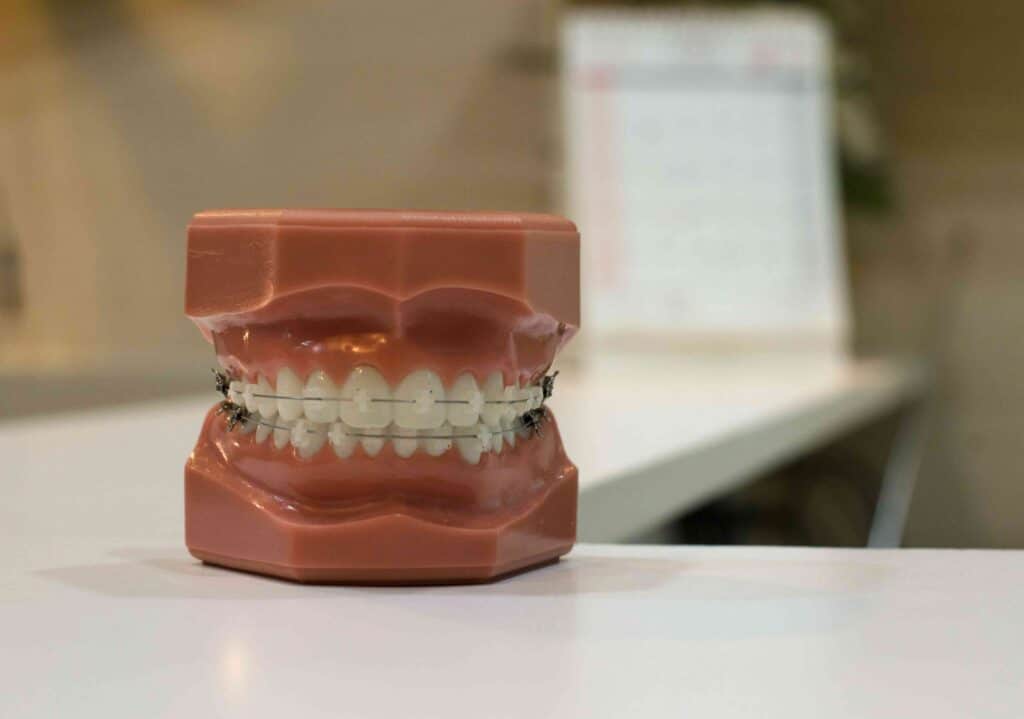
How Do Braces Actually Move Teeth?
Orthodontic treatment, whether with traditional braces or clear aligners, relies on applying consistent, controlled forces to your teeth to stimulate a biological process known as bone remodeling. This process involves specialized cells that resorb bone on the pressure side of the tooth and deposit new bone on the tension side, gradually allowing the tooth to shift into its desired position over time.
The Context:
- Cellular Mechanisms: When pressure is applied to a tooth, your body responds by sending specialized cells to the area. Osteoclasts are cells that break down the bone in the direction the tooth is moving. At the same time, osteoblasts are cells that build new bone in the space left behind. This coordinated effort is what physically allows the tooth to travel through your jawbone.
- The Periodontal Ligament: Your teeth are not rigidly fused to your jawbone. Instead, they sit in a hammock-like structure called the periodontal ligament (PDL). This ligament acts as the crucial medium through which orthodontic forces are transmitted to the surrounding bone, triggering the cellular response mentioned above.
- Force Magnitude and Duration: Moving teeth requires a delicate balance. Optimal force levels are crucial for efficient and safe tooth movement. If the force is too light, the tooth will not move. If the force is too heavy, it can restrict blood flow in the PDL, actually slowing down the process and causing unnecessary discomfort.
- Individual Biological Response: Every patient is unique. Factors like your age, natural bone density, and overall metabolic rate heavily influence your treatment speed. This is why children and teenagers, whose bones are still developing, often experience faster tooth movement than adults.
What Are the Different Types of Orthodontic Mechanics?
Orthodontic mechanics can be broadly categorized into force-driven and shape-driven systems, each employing distinct methods to achieve tooth movement. Force-driven mechanics, typical of traditional braces, use wires and brackets to exert direct pressure, while shape-driven mechanics, seen in clear aligners, utilize a series of pre-designed trays to incrementally guide teeth into alignment.
The Context:
- Force-Driven Mechanics (Traditional Braces): This system uses metal or clear ceramic brackets, archwires, and elastics. The wires are bent or shaped to an ideal arch form. As the wire tries to return to its original shape, it exerts a continuous, active force on the brackets, pulling the teeth along with it. This is particularly effective for mastering the mechanics of torque, allowing the orthodontist to precisely control the root angle of every single tooth.
- The Chemistry of Orthodontic Adhesives: For force-driven mechanics to work, the brackets must stay firmly attached to your enamel. We use highly specialized composite resins (often containing bisglycidyl methacrylate, or BISGMA) that create a micromechanical bond with the tooth. This advanced chemistry ensures the brackets can withstand the forces of chewing and wire tension while still being safe to remove at the end of your treatment.
- Active vs. Passive Ligation: How the wire connects to the bracket matters. Traditional brackets use elastic ties (active ligation), which can create friction. Self-ligating brackets use a specialized sliding door (passive ligation) to hold the wire, significantly reducing friction and allowing teeth to slide more freely during the initial alignment phase.
- Shape-Driven Mechanics (Clear Aligners): Instead of pulling teeth, clear aligners push them. The aligner is manufactured to be slightly different from your current tooth position. When you wear it, the elasticity of the plastic stretches over your teeth, pushing them into the empty spaces created by the aligner’s specific shape.
- Attachments and Interproximal Reduction (IPR): To give clear aligners more grip for complex movements, we often place small, tooth-colored composite bumps called attachments on the teeth. Sometimes, a tiny amount of enamel is polished away between teeth (IPR) to create the necessary space for crowded teeth to align smoothly.
Why Do Some Orthodontic Treatments Work Faster Than Others?
The speed of your orthodontic treatment is influenced by a combination of factors, including the chosen appliance system, the complexity of your malocclusion, individual biological response, and your daily compliance. While some advanced techniques may offer accelerated tooth movement, a successful and efficient outcome relies heavily on precise treatment planning and consistent adherence to your orthodontist’s instructions.
The Context:
- Appliance System Efficiencies: Certain tools excel at specific tasks. Self-ligating metal braces can sometimes offer faster initial leveling because of reduced friction. Clear aligners can be incredibly efficient for straightforward cases because they map out the most direct path for a tooth to move, avoiding the “round-tripping” (moving a tooth out of the way before bringing it back) that sometimes happens with wires.
- Complexity of the Case: The severity of your orthodontic needs dictates the timeline. Fixing mild crowding will naturally be much faster than correcting severe jaw discrepancies, impacted canines, or complex bite issues like severe overbites and underbites.
- Temporary Anchorage Devices (TADs): For highly complex movements, orthodontists might use TADs. These are tiny titanium anchors placed temporarily in the jawbone. They provide an immovable anchor point, allowing the orthodontist to move specific teeth quickly and directly without accidentally shifting adjacent teeth.
- Your Personal Compliance: This is the variable you completely control. Clear aligners only work when they are worn for the required 22 hours a day. With braces, consistently wearing your rubber bands as directed and avoiding hard, crunchy foods that break brackets will ensure your treatment finishes exactly on schedule.

Frequently Asked Questions
Q: Do clear aligners work as fast as metal braces?
A: For mild to moderate crowding and spacing issues, clear aligners can often achieve results just as fast, or sometimes faster, than traditional braces. Because the aligners are programmed digitally, they plan the most efficient, direct route for tooth movement. However, for severe bite corrections or complex root movements, the continuous torque provided by metal braces often makes them the faster and more predictable option.
Q: Does bone remodeling hurt?
A: The biological process of bone remodeling itself does not hurt, but the initial pressure required to trigger it can cause temporary soreness. When you first get your braces on, or when you switch to a new clear aligner tray, your teeth will likely feel tender for a few days. This is a completely normal sign that the periodontal ligament is responding to the pressure and the remodeling process has successfully begun.
Start Your Smarter Smile Journey in Santa Maria
Understanding the science behind your smile makes the entire orthodontic process less intimidating and much more rewarding. Whether your unique needs call for the precise torque of modern metal braces, the aesthetic appeal of clear ceramic brackets, or the flexible convenience of shape-driven clear aligners, the physics of your treatment are designed specifically for your success.
At Explore Orthodontics in Santa Maria, CA, Dr. Brandon Malan and our team believe in providing care that feels like family. We take the time to explain your options, removing the confusion and pressure from the process. If you are ready to see how advanced orthodontic mechanics can safely and efficiently transform your smile, reach out to us today.
Schedule your complimentary consultation today.