

Orthodontics has advanced light-years beyond the bulky metal appliances of the past. If you are considering straightening your teeth today, you have access to highly engineered systems designed to move teeth with incredible precision. But looking at a sleek plastic tray or a low-profile metal bracket, you might wonder how these small devices actually reshape your smile.
The mechanism behind a straighter smile is a fascinating blend of biology, physics, and material science. Both clear aligners and traditional braces rely on the same fundamental biological responses to move teeth safely through the jawbone. However, the way they deliver pressure to achieve that result is entirely different.
Understanding the mechanics, materials, and effectiveness of both systems can help you make a confident, informed decision for yourself or your family. By looking closer at the science of tooth movement, you can discover which orthodontic path will deliver the best results for your unique needs.
Key Takeaways
- Both clear aligners and traditional braces work by applying gentle pressure to move teeth safely through the jawbone.
- The primary difference lies in how they deliver this pressure, with clear aligners using customized trays and braces utilizing brackets and wires.
- Understanding the mechanics and materials of each option can help you determine the most effective and comfortable solution for your orthodontic goals.
- Evaluating your unique needs, lifestyle, and preferences is crucial when choosing between clear aligners and traditional braces.
What Are Traditional Braces and How Do They Work?
Traditional braces utilize a system of brackets, archwires, and ligatures to apply continuous force, gradually moving teeth into their desired positions. This method relies on mechanical pressure to reshape the bone and tissue surrounding the teeth, a biological process known as bone remodeling. By maintaining constant tension, these appliances successfully guide even the most complex bite issues into perfect alignment.
The efficiency of traditional braces comes from their fixed nature. Because they are securely attached to your teeth, they work around the clock without any required effort on your part.
- Components of traditional braces: The system consists of brackets glued to the teeth, a flexible archwire that connects them, and small rubber ligatures (or self-ligating doors) that hold the wire in place.
- Force-driven mechanics: Braces use the elasticity of the archwire. As the wire tries to return to its original shape, it pulls the teeth along with it.
- Bone remodeling: When the wire applies pressure, it compresses the periodontal ligament on one side of the root. This signals your body to send osteoclasts (cells that break down bone) to the pressure side, and osteoblasts (cells that build new bone) to the tension side, safely moving the tooth through the jaw.
- The advantages: Braces are highly effective for severe crowding and complex bite issues. Since they are permanently attached, there are no compliance issues to worry about.
- The disadvantages: They are visible, require specific dietary restrictions to avoid breaking brackets, and make brushing and flossing more challenging.
What Are Clear Aligners and How Do They Work?
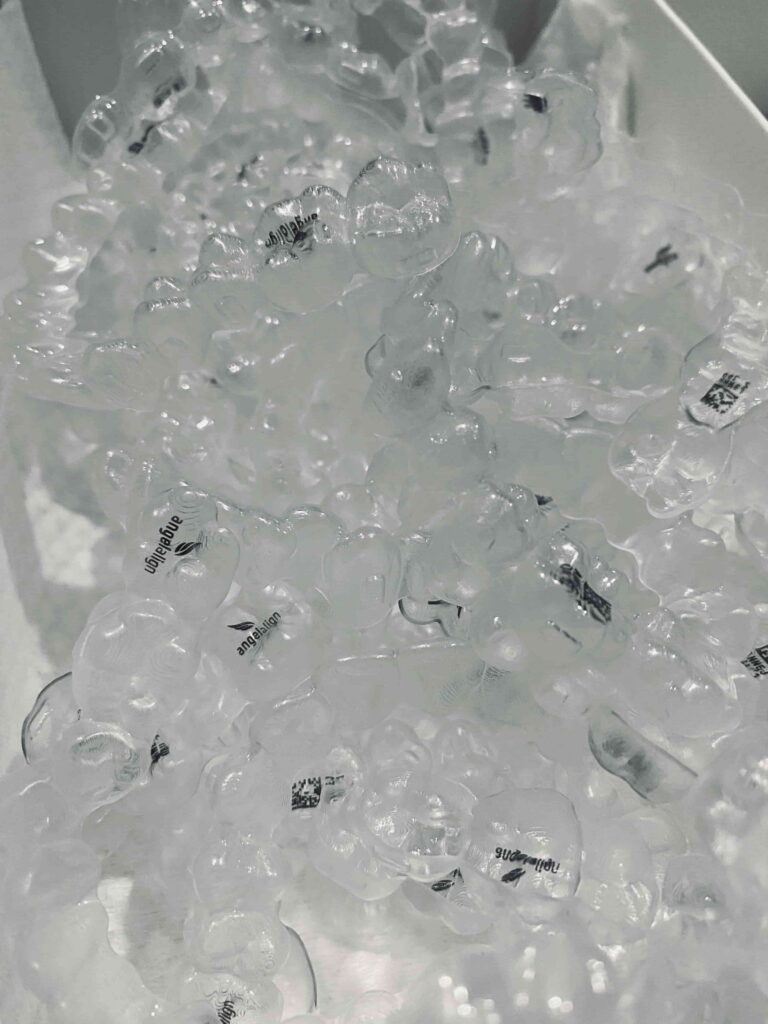
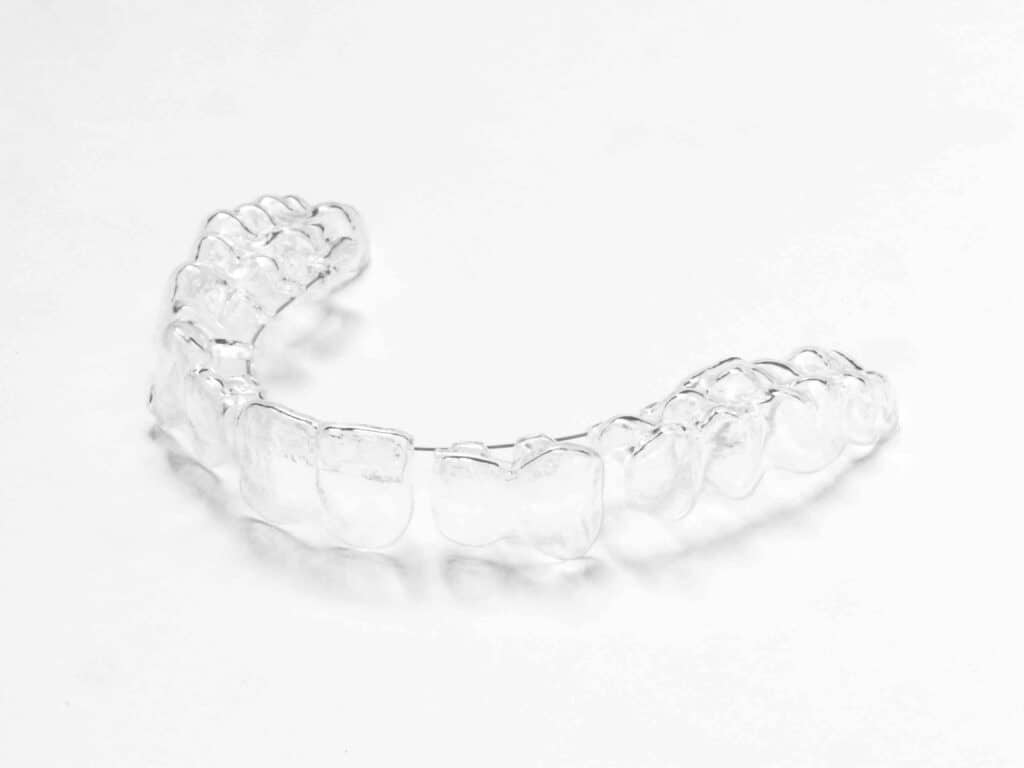
Clear aligners are custom-made, removable plastic trays that exert gentle, consistent pressure on your teeth to guide them into perfect alignment. Each set of aligners is precisely manufactured to achieve specific tooth movements, progressively pushing your teeth over a series of predetermined stages. This shape-driven approach allows for discreet, comfortable treatment without relying on metal wires or brackets.
Clear aligners offer a modern aesthetic without sacrificing clinical precision. You progress through a series of trays, swapping them out every week or two as your teeth gradually shift.
- Materials and manufacturing: Modern aligners are crafted from advanced, BPA-free medical-grade plastics using high-resolution 3D printing technology.
- Shape-driven mechanics: Instead of pulling teeth, aligners push them. The plastic tray is manufactured to represent the next stage of your smile. When you wear it, the plastic stretches over your teeth, and its attempt to return to its manufactured shape applies the moving force.
- Treatment progression: Small, tooth-colored composite bumps called “attachments” are often bonded to specific teeth. These act as tiny handles, giving the smooth plastic aligner something to grip for complex movements.
- The advantages: Aligners are virtually invisible and completely removable. You can eat your favorite foods and maintain your normal brushing and flossing routine.
- The disadvantages: You must wear the trays for at least 22 hours a day. If you forget to wear them, your teeth will not move.
The Physics of Tooth Movement: Why Some Braces Are Faster
The speed of orthodontic treatment is influenced by the type and magnitude of force applied, individual biological responses to bone remodeling, and the complexity of the malocclusion. While some methods might appear faster initially, effective tooth movement prioritizes controlled and consistent forces to ensure healthy, stable results that protect the roots and surrounding tissues from permanent damage.
To truly understand treatment speed, we have to look closely at the physics and chemistry happening inside your mouth. Moving a tooth too fast can cut off blood supply to the ligament, which actually stops tooth movement entirely.
The secret to efficient treatment lies in how force is managed. Clear aligners utilize shape-driven mechanics to push teeth along a direct path. If a tooth does not need to move, the aligner holds it perfectly still. Conversely, traditional braces use force-driven mechanics. Sometimes, applying a straight wire to crowded teeth causes them to temporarily flare out before they can be pulled back in.
Modern metal brackets also heavily rely on the mechanics of torque. The slot in a high-quality bracket is precision-milled with specific angles built directly into the base. This built-in torque steers the root of the tooth in three dimensions, rather than just tipping the crown forward or backward.
Securing these precise brackets requires advanced materials. The chemistry of orthodontic adhesives plays a huge role in keeping treatment on track. Using an acid etch and a specialized composite resin creates a mechanical interlock between the bracket and your enamel. This shear bond strength must be tough enough to withstand the forces of chewing, yet safe enough to be cleanly removed when your treatment is complete. Broken brackets delay treatment, making high-quality adhesive chemistry vital for a fast result.
Are Clear Aligners as Effective as Traditional Braces?
While clear aligners are highly effective for a wide range of orthodontic issues, traditional braces often remain the preferred choice for extremely complex cases. Conditions involving significant bite corrections, severe rotations, or distinct jaw discrepancies benefit from the fixed nature of braces, which have the ability to apply precise, multi-directional forces consistently without relying on patient compliance.
Aligner technology has improved drastically, but certain anatomical challenges still require the robust mechanics of metal or ceramic braces.
- Case selection: Clear aligners excel at closing small gaps, resolving mild to moderate crowding, and correcting simple bite issues.
- Limitations of aligners: Round teeth, like premolars, can be difficult for aligners to rotate effectively. Severe vertical movements, like pulling an impacted tooth down into the arch, typically require the continuous pull of a bracket and wire.
- Surgical orthodontics: If your treatment plan involves orthognathic jaw surgery, traditional braces are generally required to perfectly align the teeth in preparation for the surgical procedure.
- Hybrid treatments: Occasionally, an orthodontist might start a complex case with a short phase of traditional braces to handle severe rotations, then seamlessly transition the patient to clear aligners to finish the aesthetic detailing.
Key Considerations for Your Orthodontic Journey
Choosing the right orthodontic treatment depends on evaluating your lifestyle, aesthetic preferences, and the specific clinical needs of your smile. It is essential to weigh the convenience and invisibility of clear aligners against the robust, predictable control of traditional metal braces, ideally with the guidance of a board-certified orthodontist who can assess your unique bone structure.
Your daily routine matters. If you frequently snack, drink coffee throughout the day, or know you will struggle to wear trays for 22 hours, the hassle-free nature of traditional braces might be the better fit. If you play wind instruments, participate in contact sports, or prioritize a metal-free appearance, clear aligners could be your perfect match.
At Explore Orthodontics in Santa Maria, we believe in honest guidance without pressure. We evaluate your unique anatomy and discuss your lifestyle to recommend the safest, most efficient path to your new smile.
Frequently Asked Questions
Q: Do clear aligners hurt more than traditional braces?
A: Both options cause mild soreness for a few days after adjustments or switching to a new tray. This discomfort means the bone remodeling process has started. Aligners tend to cause less irritation to the cheeks and lips because they lack metal wires.
Q: Can adults get traditional braces?
A: Absolutely. Many adults choose ceramic clear braces, which function exactly like metal braces but use tooth-colored brackets for a much more discreet appearance.
Q: How do I clean my clear aligners?
A: You should clean your aligners daily with cold water and a soft toothbrush to remove plaque. Avoid hot water, as it can warp the medical-grade plastic and ruin the precise shape-driven mechanics of the tray.
Taking the First Step Toward Your New Smile
Achieving a healthy, confident smile is an exciting investment in your future. Whether your journey involves the low-friction mechanics of modern braces or the digital precision of clear aligners, the biological science working behind the scenes is nothing short of incredible.
The most important factor in your treatment speed and success is the expertise of the doctor guiding those mechanics. Reach out to Explore Orthodontics in Santa Maria to schedule a complimentary consultation, and let us help you find the perfect system to unlock your best smile.